
The Evidence
Objective brain changes you can see and measure. Our QEEG brain mapping technology provides hard data—not just subjective feelings—to demonstrate the effectiveness of Brain Renew.
8
Study Completers
Adults aged 57–78 in our Boulder Exploratory Study
42%
Avg. Brain Plasticity
Intra-subject QEEG change after 4 sessions (N=8)
82.5%
Improved or Maintained
Of 40 CANTAB band-domain measures across 8 participants
0
Serious Adverse Events
Non-invasive, drug-free protocol (N=8)
Notable Neuroplasticity in Older Adults
Published neuroscience research documents that brain plasticity peaks in childhood and declines progressively with age. In our exploratory study, 8 participants aged 57–78 (mean age 67) showed 42% average brain plasticity change from their own baseline after just 4 sessions. 3 of 8 participants achieved post-treatment CANTAB Spatial Working Memory error counts of 0–1.
42%
Avg. Brain Plasticity
mean age 67, range 57–78
4
Sessions
1 hour each, weekly
28–56%
Plasticity Range
across 8 participants
97.2%
Best Single-Participant WM Error Reduction
CANTAB SWM errors: 36 → 1 (age 78)
What the Published Literature Says
Neuroplasticity — the brain's capacity to reorganize and form new synaptic connections — follows a well-documented lifespan trajectory. It peaks during childhood "critical periods," declines progressively through adulthood, and is substantially reduced in older age (Bhatt et al., "Changes in plasticity across the lifespan," Progress in Brain Research, 2015; Seidler et al., "Aging, brain plasticity, and motor learning," Ageing Research Reviews, 2024).
In our Boulder Exploratory Study (8 completers, mean age 67), participants showed an average of 42% intra-subject QEEG plasticity change (range 28–56%) after only 4 treatment sessions. Of 8 participants, 3 achieved post-treatment CANTAB Spatial Working Memory (SWM) total error counts of 0–1, which approach published CANTAB normative ranges for younger adult age bands (Cambridge Cognition, CANTAB Normative Data, 2023).
The single best individual result was a participant, age 78, who reduced SWM total errors from 36 to just 1 — a 97.2% reduction. These exploratory findings from 8 participants suggest the Brain Renew protocol may support neuroplastic change in older adults. Confirmation requires larger, controlled trials.
QEEG Brain Mapping Results
Quantitative EEG captures detailed brain wave activity across 19 channels, showing measurable changes in brain function before and after treatment.
Before
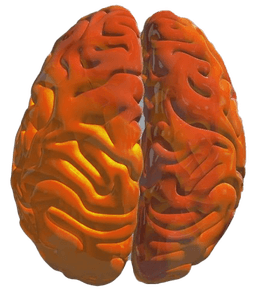
Dysregulated activity
After
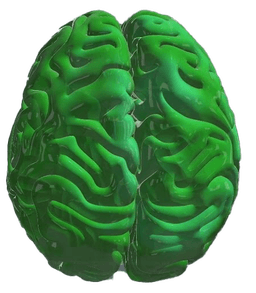
Normalized patterns
QEEG brain maps showing improvement in neural connectivity and frequency band normalization after treatment protocol.
QEEG Plasticity & Normalization
Intra-subject QEEG change averaged across 8 participants, ages 57–78. Plasticity measures how much each participant's brain wave patterns changed from their own pre-treatment baseline. Normalization measures movement toward age-matched healthy norms.
Brain Plasticity (Eyes Open)
Average change in brain wave patterns with eyes open
Brain Plasticity (Eyes Closed)
Average change in brain wave patterns with eyes closed
Normalization (Eyes Open)
Movement toward healthy brain wave norms, eyes open
Normalization (Eyes Closed)
Movement toward healthy brain wave norms, eyes closed
Study Summary
Boulder Exploratory Study — Brain Renew Protocol
Prospective exploratory study of QEEG and CANTAB outcomes in adults aged 57–78, December 2025 – January 2026
Methodology
- • Prospective exploratory design, 8 completers
- • Ages 57–78 (mean ~67), 3 female / 5 male
- • Pre/post QEEG brain mapping + CANTAB cognitive testing
- • 4 weekly 1 hour sessions
- • Boulder, CO — December 2025 – January 2026
Key Findings
- • 42% average intra-subject QEEG plasticity change
- • 40% of CANTAB band-domain measures improved
- • 82.5% of 40 CANTAB measures improved or maintained
- • All 8 participants showed ≥5% absolute QEEG frequency-band change
- • 0 serious adverse events
Remarkable Neuroplasticity
Participants aged 57–78 demonstrated 42% average intra-subject QEEG plasticity change (range 28–56%) after only 4 sessions. Published neuroscience research documents progressive neuroplasticity decline with age, making these levels of measurable brain change noteworthy in this age group. 3 of 8 participants achieved post-treatment CANTAB Spatial Working Memory error counts of 0–1, approaching published normative ranges for younger adult age bands.
Limitations: This is an exploratory study with a small sample size (N=8) and no control group. Individual results may vary. A Phase 2 randomized controlled trial with 100 participants across 4 arms is in planning.
For Clinicians & Researchers
Interested in reviewing our full protocol documentation, accessing de-identified data for research, or collaborating on future studies?